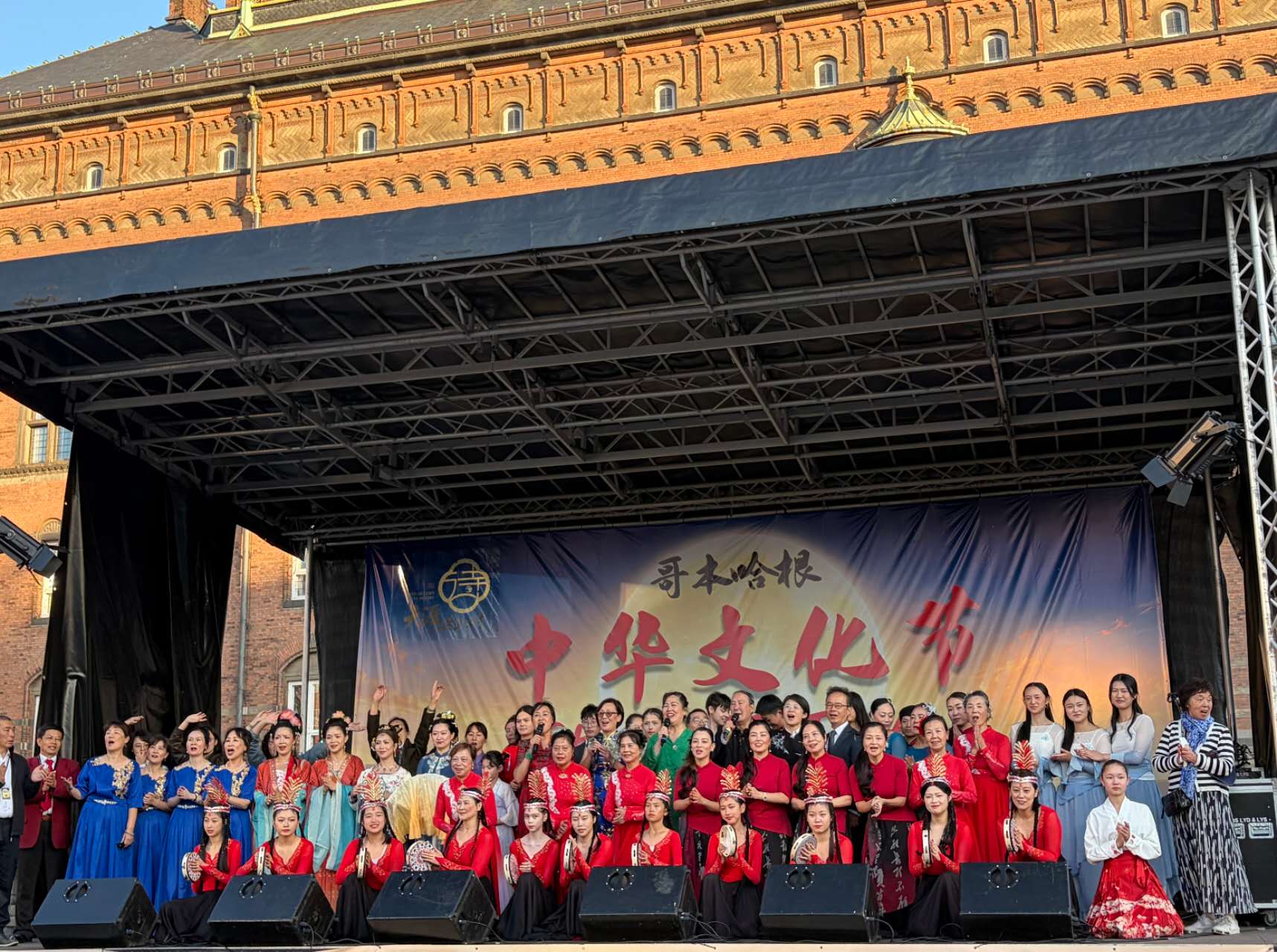
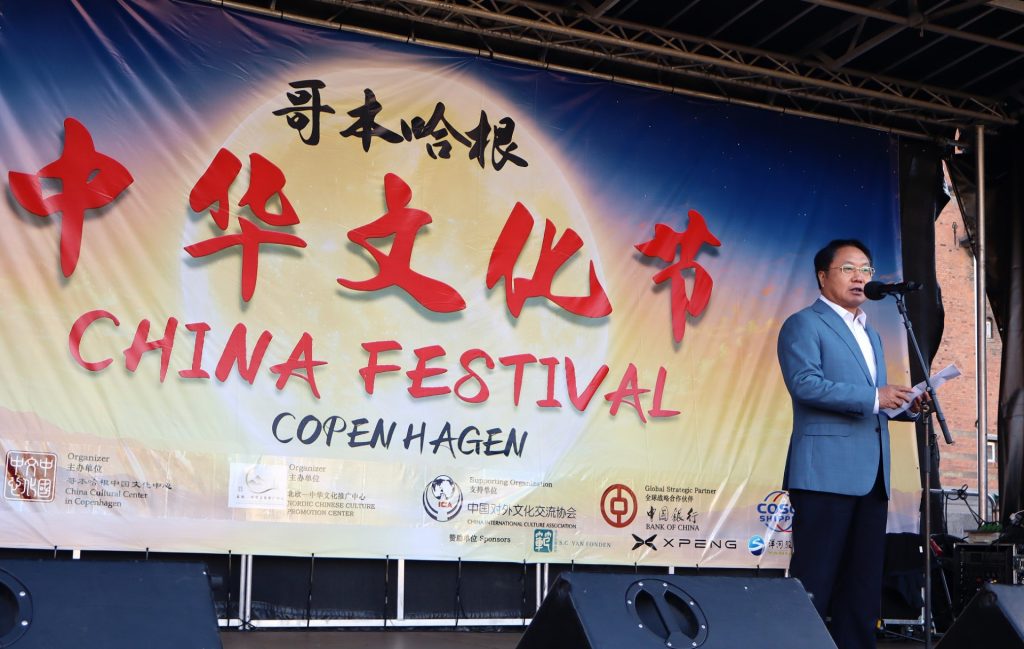
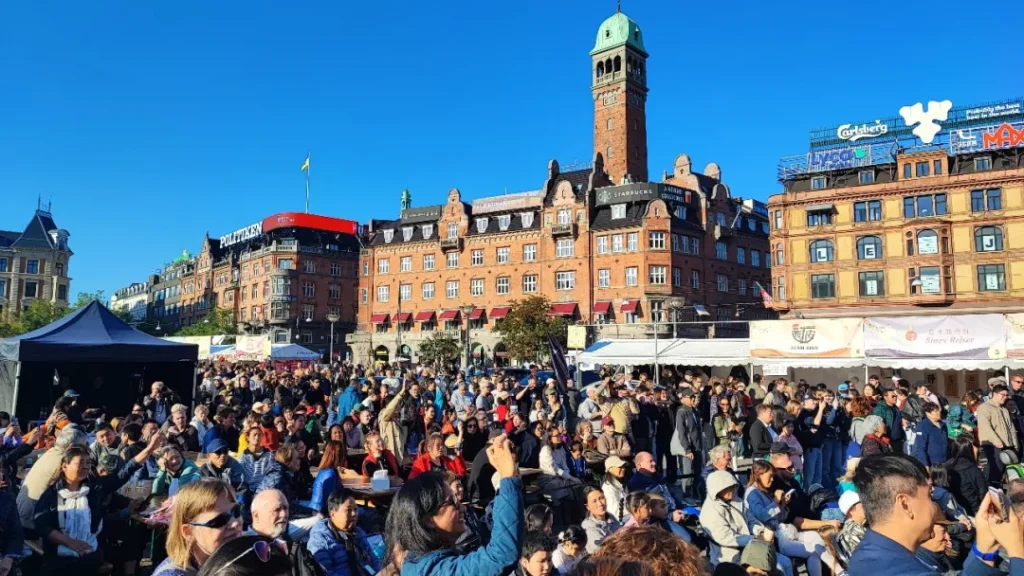
On September 27, the “Mid-Autumn in Poetry” China Festival was held at Copenhagen City Hall Square, jointly organised by the China Cultural Center in Copenhagen and the Nordic–China Cultural Promotion Center.
Centred on the Mid-Autumn Festival, the event brought together Chinese opera, music, dance, food and traditional cultural activities. Chinese and Danish artists, cultural organisations, together with guests from across Danish society, gathered to celebrate the festival and share a day of cultural exchange.
1. Lion Dance Opens the Festival
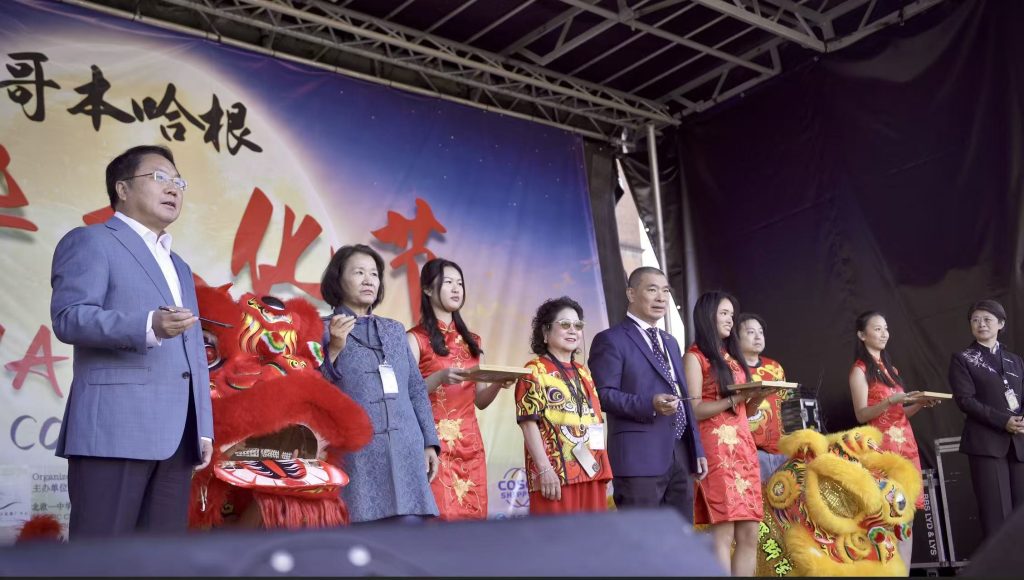
At 10 am, a traditional lion-eye-dotting ceremony marked the start of the celebrations.
Accompanied by the lively beat of drums and gongs, two lions danced and leapt into the square, drawing the attention of visitors and bringing a distinctly festive atmosphere to Copenhagen City Hall Square.
2. A Celebration Across Cultures
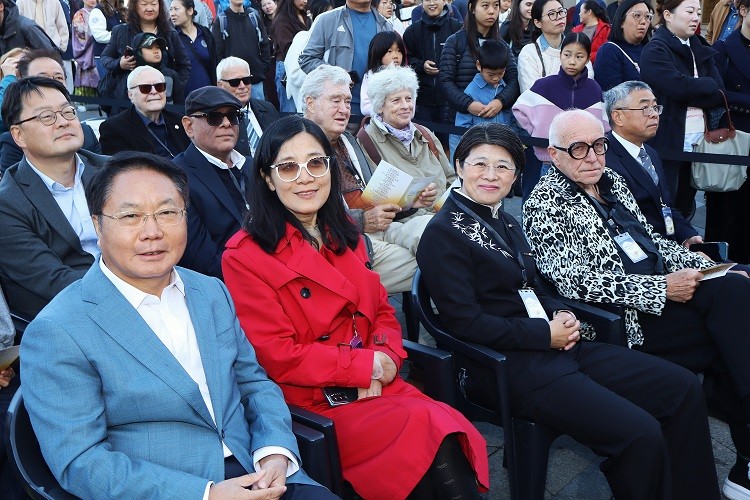
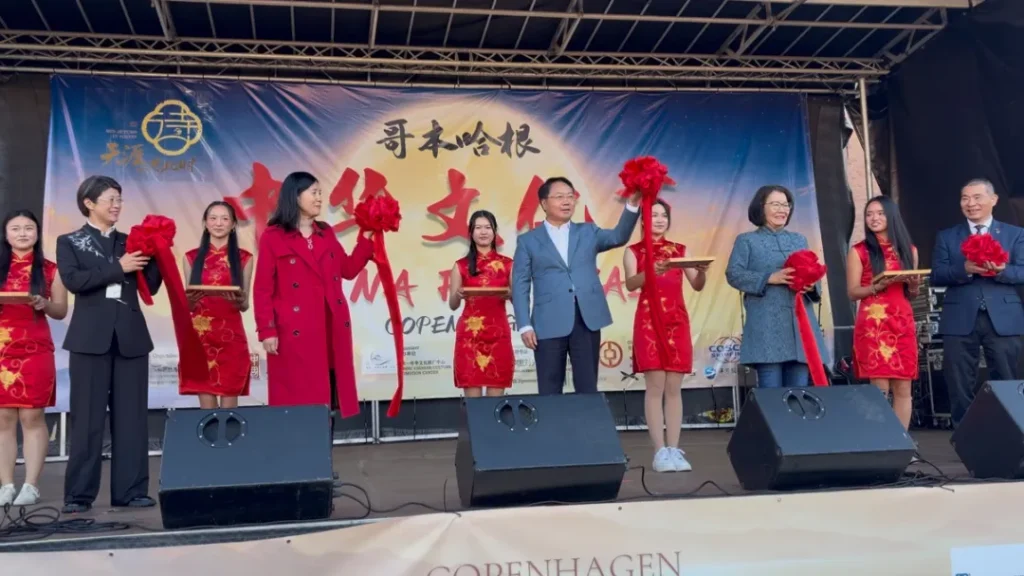
A ribbon-cutting ceremony followed, officially kicking off the “Mid-Autumn in Poetry” China Festival. Attending distinguished guests were Chinese Ambassador to Denmark Wang Xuefeng and his wife Tong Xin, as well as 4 other ambassadors to Denmark, chairman of the S.C.Van Fonden in Denmark, and representatives from Danish political, cultural and media fields.
3. Traditional Arts Meet Contemporary Expression
The stage programme brought together a wide range of Chinese performing arts, including music, dance, opera and martial arts.
Artists and cultural groups from China and Denmark shared the stage throughout the day, presenting different traditions and styles of Chinese performance.
Wuju Opera: A Taste of Traditional Chinese Theatre
Wuju, a traditional form of Chinese opera from Jinhua in Zhejiang Province, has a history spanning several centuries. It is known for its distinctive vocal styles, combination of singing and martial arts, and dynamic fight scenes.
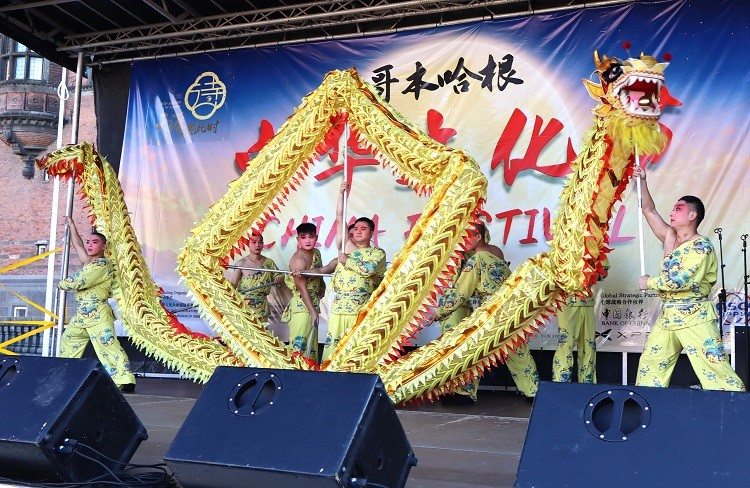
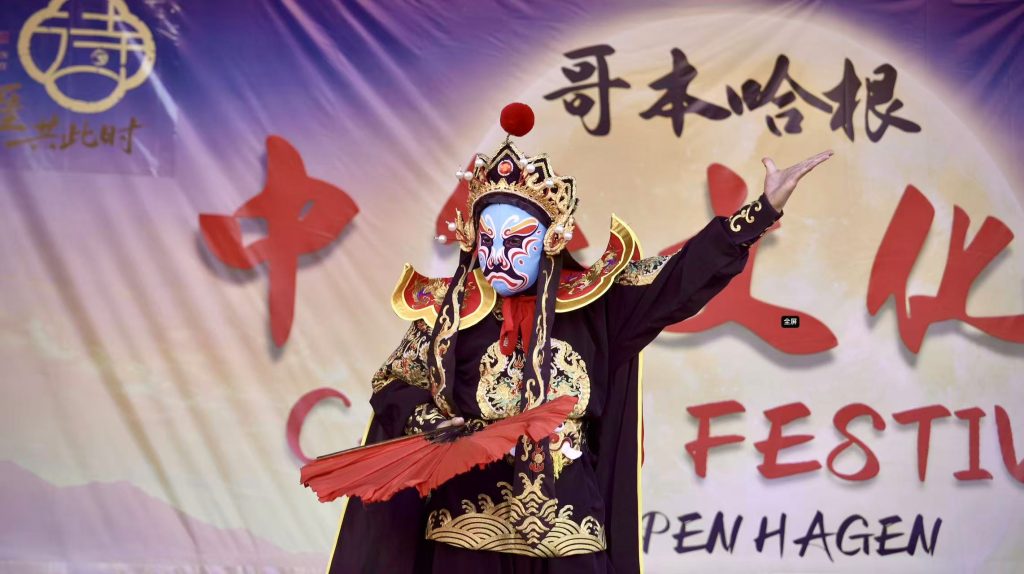
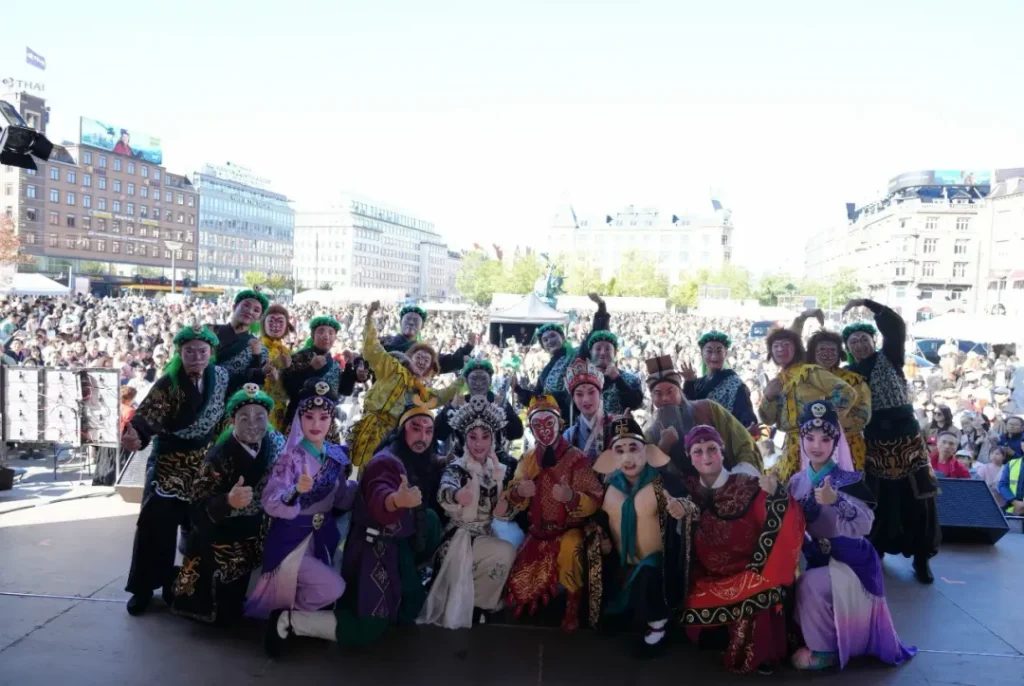
The “Nine-Section Dragon” performance brought the dragon to life through energetic and agile movements.
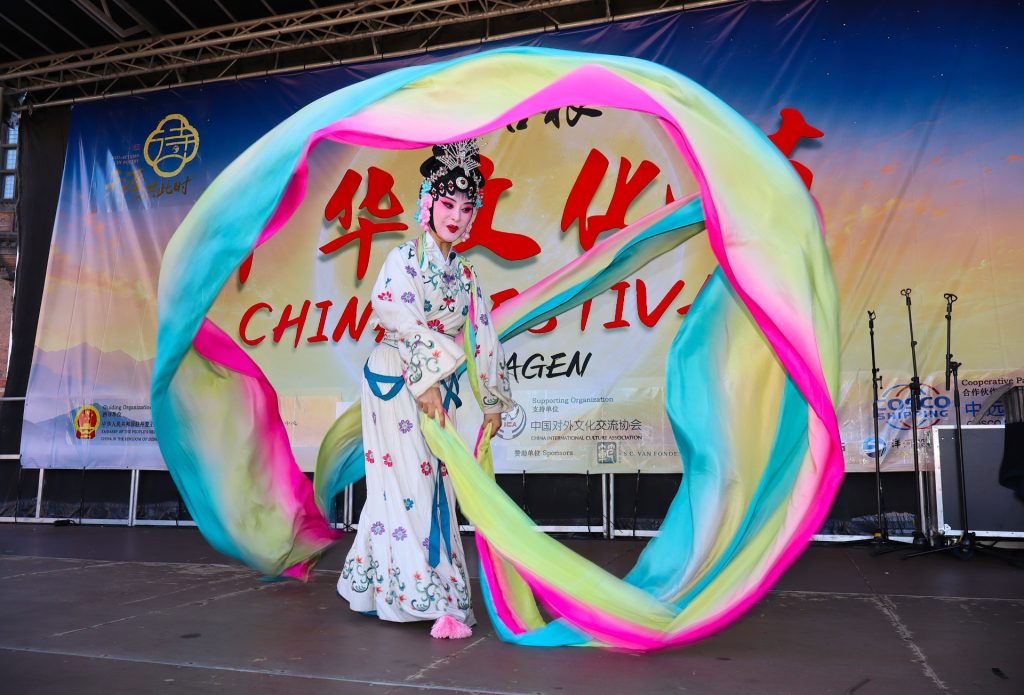
Wuju pieces including “The Heavenly Maiden Scatters Flowers” and “The Sedan Chair” highlighted the expressive movement and theatrical traditions of Chinese opera.
A face-changing performance drew audible reactions from the audience as masks were transformed in rapid succession, while the huqin solo “Hui Melody” offered a glimpse into the musical traditions associated with Chinese opera.
The programme culminated in “The Three Battles with the White-Bone Demon”, combining singing, martial arts and stage effects to bring the well-known story to life.
Stage Performances
Chen-style Tai Chi demonstrated the interplay of strength and softness. Traditional Chinese instrumental music and songs including “My Motherland and I” and “Wild Geese” brought a strong Chinese character to the programme.
Dance performances including “A Beautiful Woman”, “The Snow Lotus on the Mountain” and “The Pomegranate Blossoms” offered a glimpse of the regional diversity of Chinese culture.
Slagelse Garden also took part, performing “Ode to the Motherland”. The performance added a Danish voice to a programme centred on Chinese music and culture.
Poetry, Music and the Mid-Autumn Spirit

A special Mid-Autumn poetry dialogue brought together poetry and music, reflecting on the moon, homesickness and reunion.
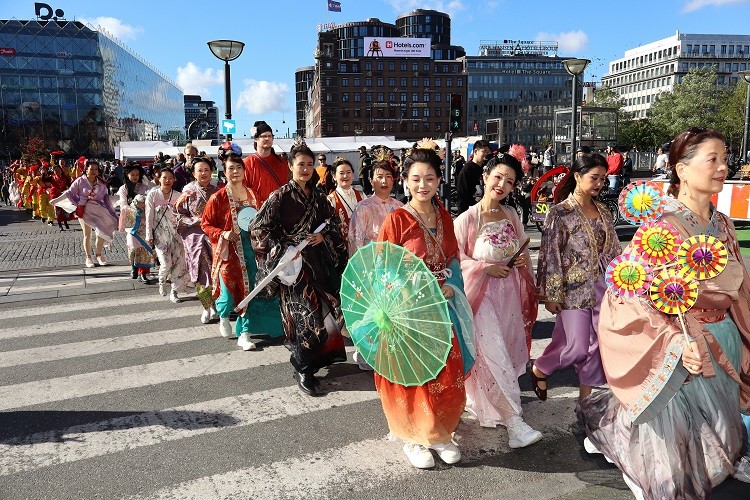
Electronic keyboard performances, choral singing, duets and contemporary songs added a modern element to the programme. Hanfu, traditional Chinese clothing, women’s drum performances and children’s dances brought participants of different ages and cultural backgrounds into the celebration.
4. Experiencing Chinese Culture First-hand
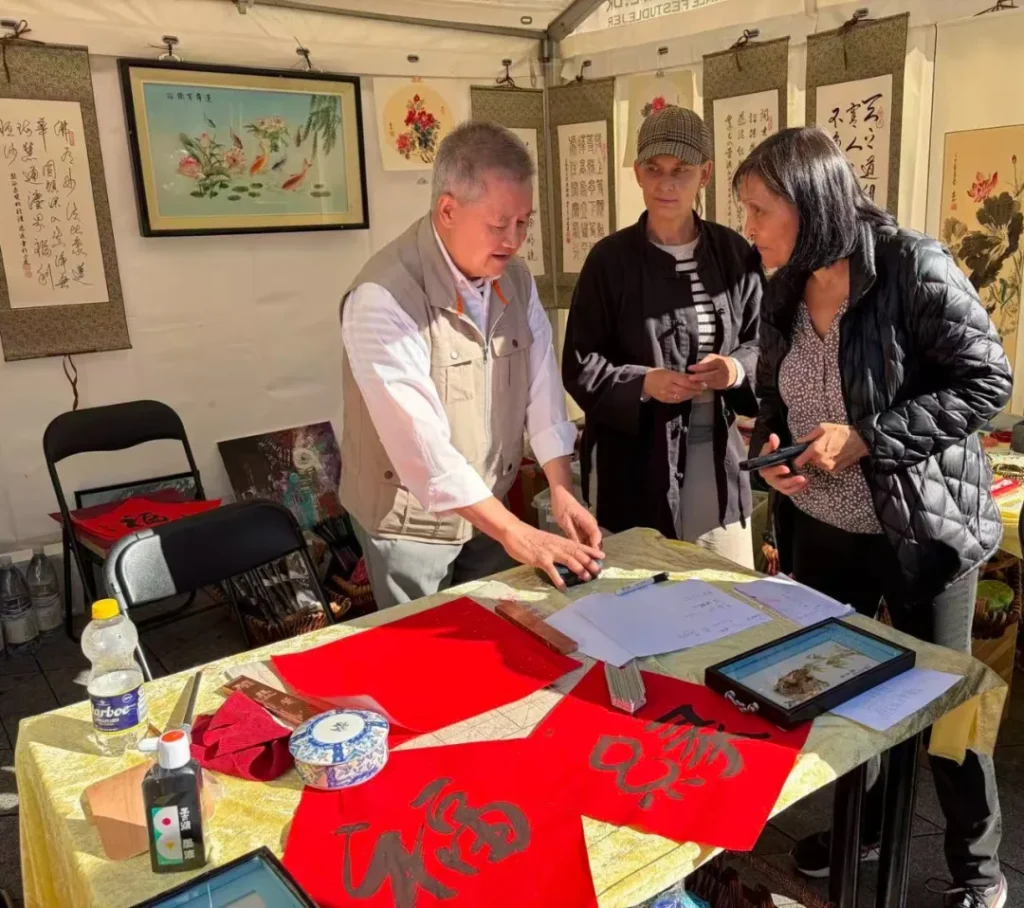
The festival extended beyond the stage, with visitors invited to explore Chinese calligraphy, traditional crafts, food and other cultural activities.
Chinese Calligraphy: The Art of the Brush
Visitors picked up brushes, dipped them in ink and tried their hand at Chinese calligraphy.
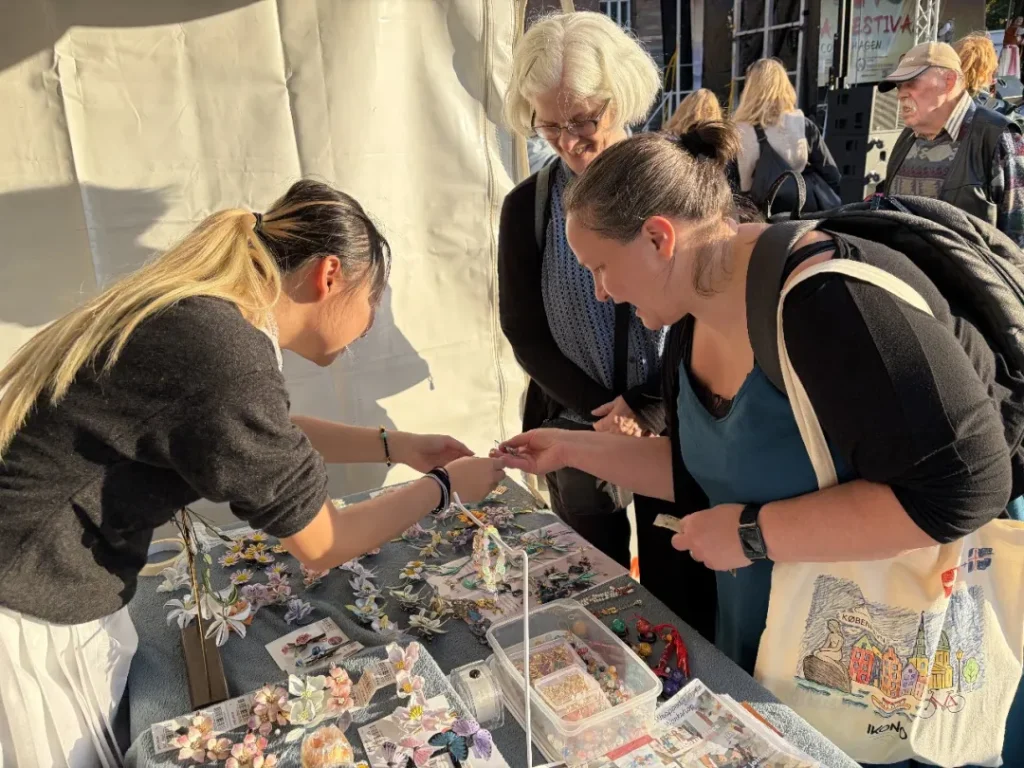
Chan Hua: A Traditional Craft
The traditional craft of chan hua, which involves winding and weaving threads into intricate designs, gave visitors an opportunity to experience an element of China’s intangible cultural heritage for themselves.
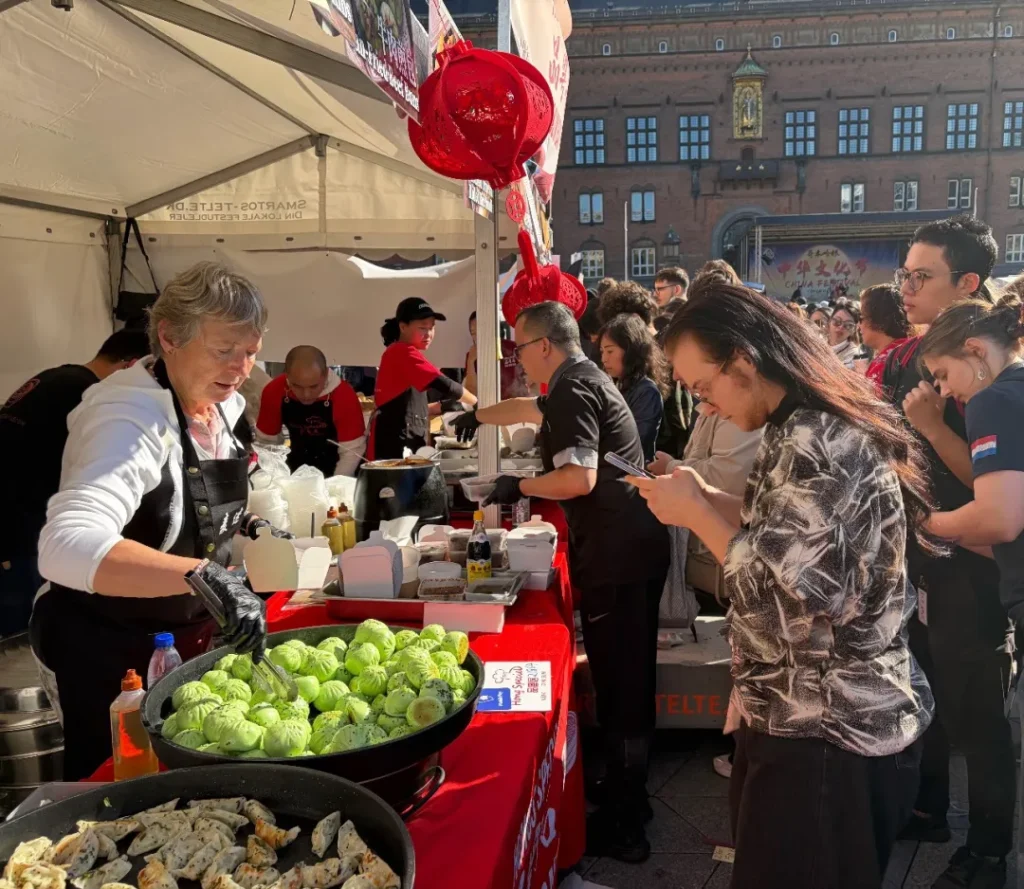
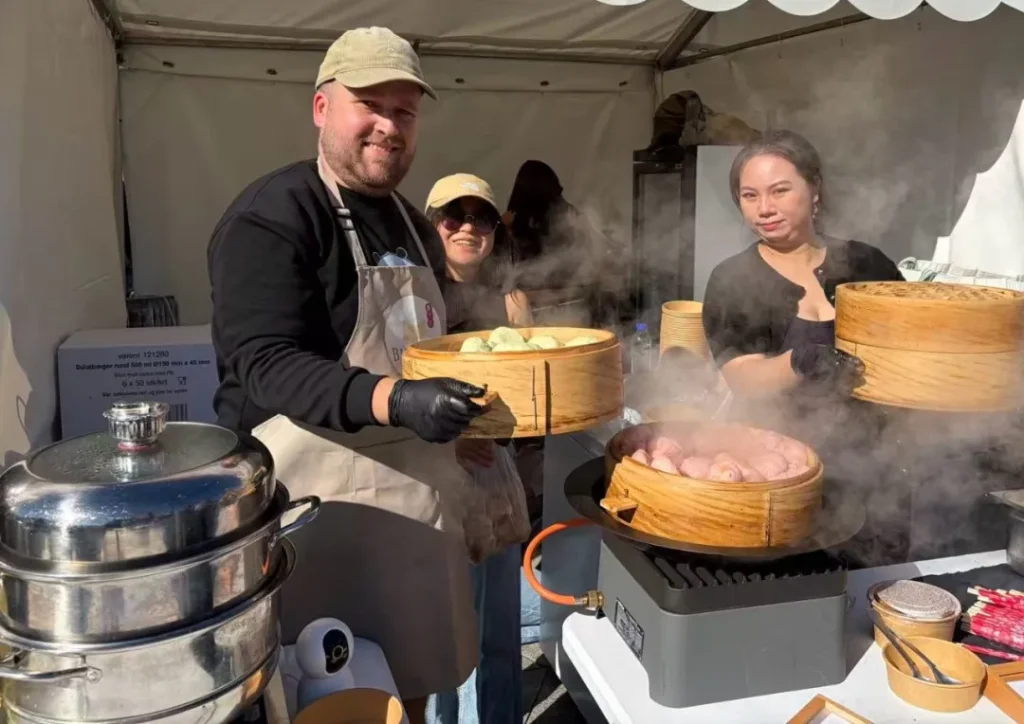
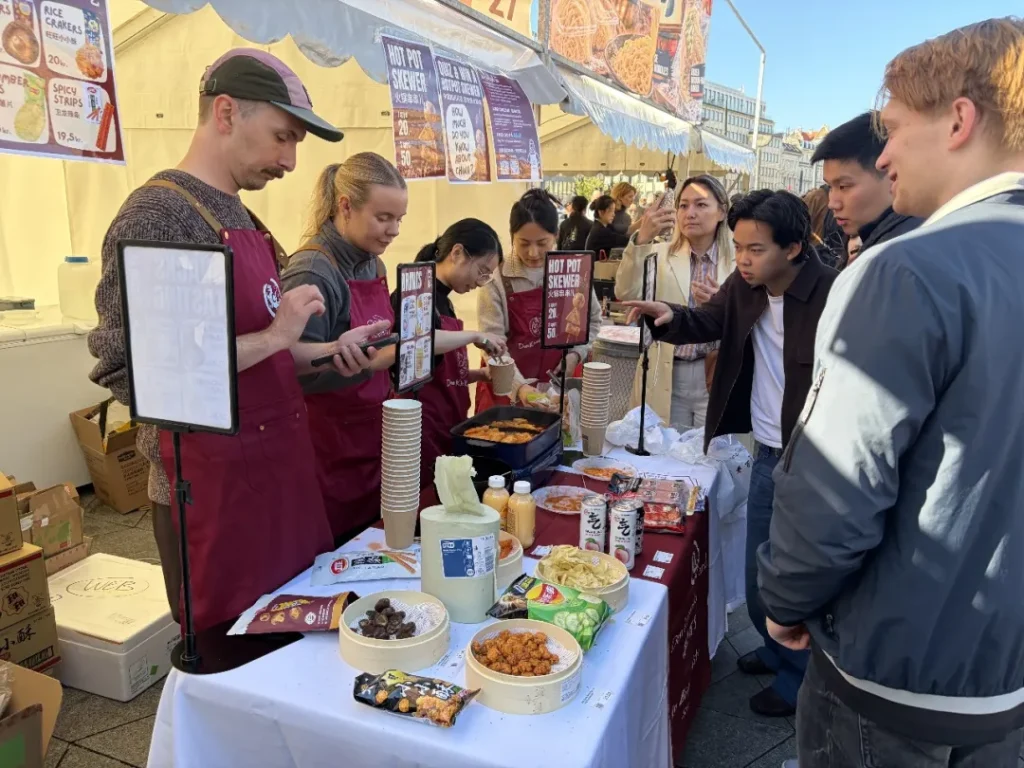
Chinese specialities, mooncakes and a live noodle-making demonstration added another dimension to the festival, allowing visitors to experience Chinese culture through both sight and taste.
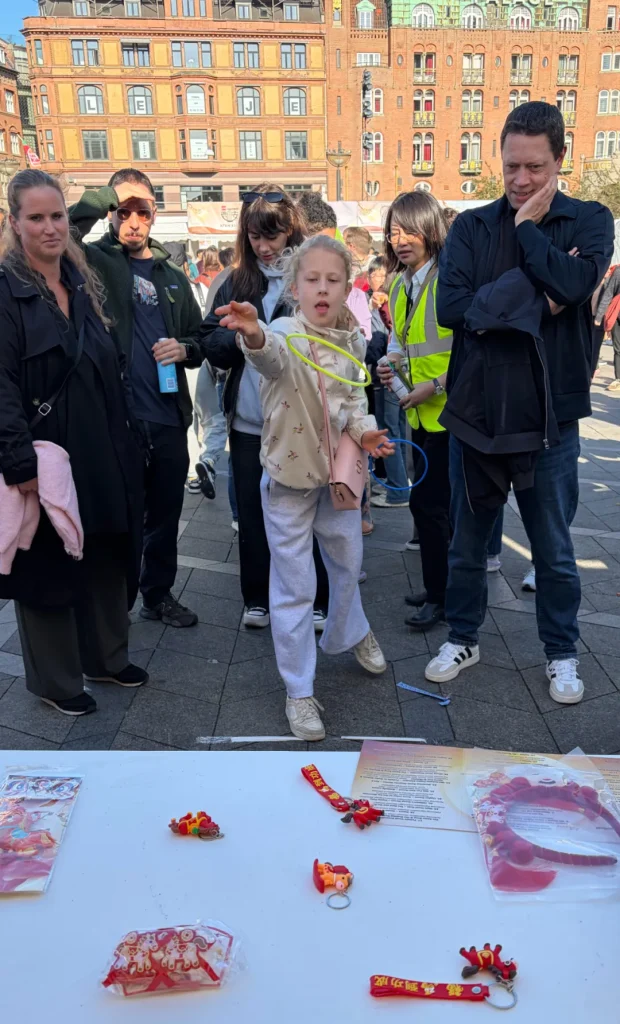
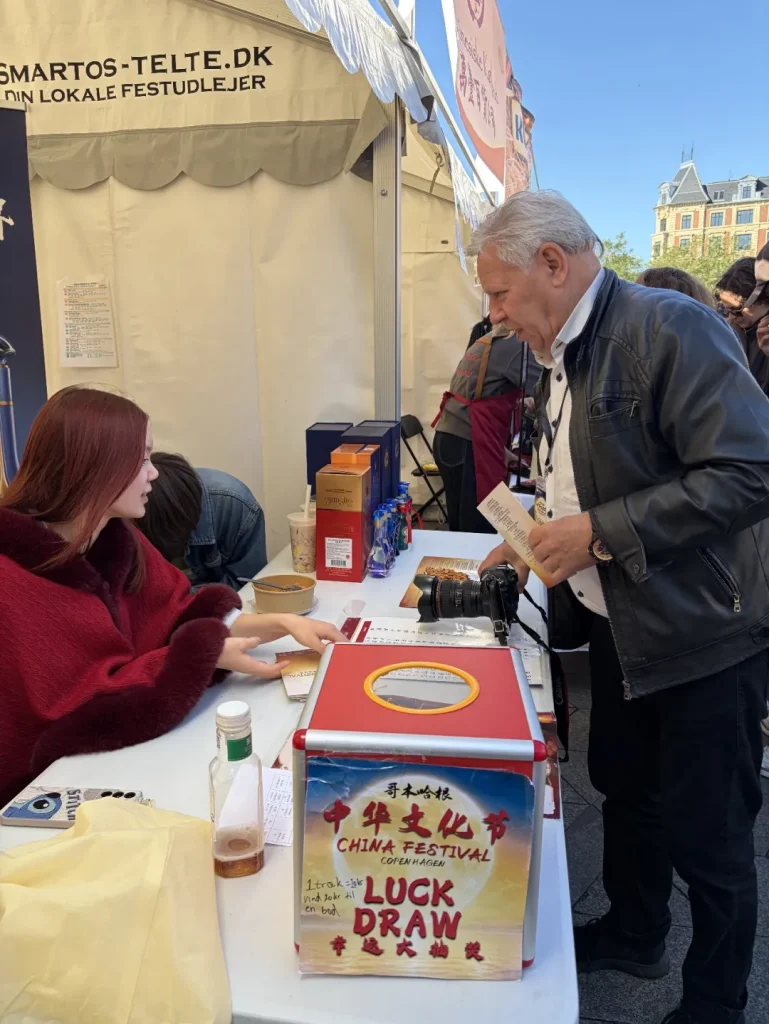
5. Culture Through Interaction
The festival also featured prize-winning interactive activities centred on Chinese culture and Mid-Autumn traditions.
Visitors took part in quizzes. Lucky participants received gifts, adding to the festive atmosphere while giving visitors another opportunity to engage with Chinese culture.
6. A Moonment to Remember
From stage performances to hands-on activities, from traditional opera to contemporary music and dance, and from cultural quizzes to Chinese food, the “Mid-Autumn in Poetry” China Festival brought together many different ways of experiencing Chinese culture.
(Photos by Chinese and Danish photographers at the event.)


