September in Denmark is filled with the quiet beauty of early autumn. As melodies from the East filled the historic building that once housed the Royal Danish Academy of Music, a cultural encounter crossing cultures and continents unfolded in Copenhagen.
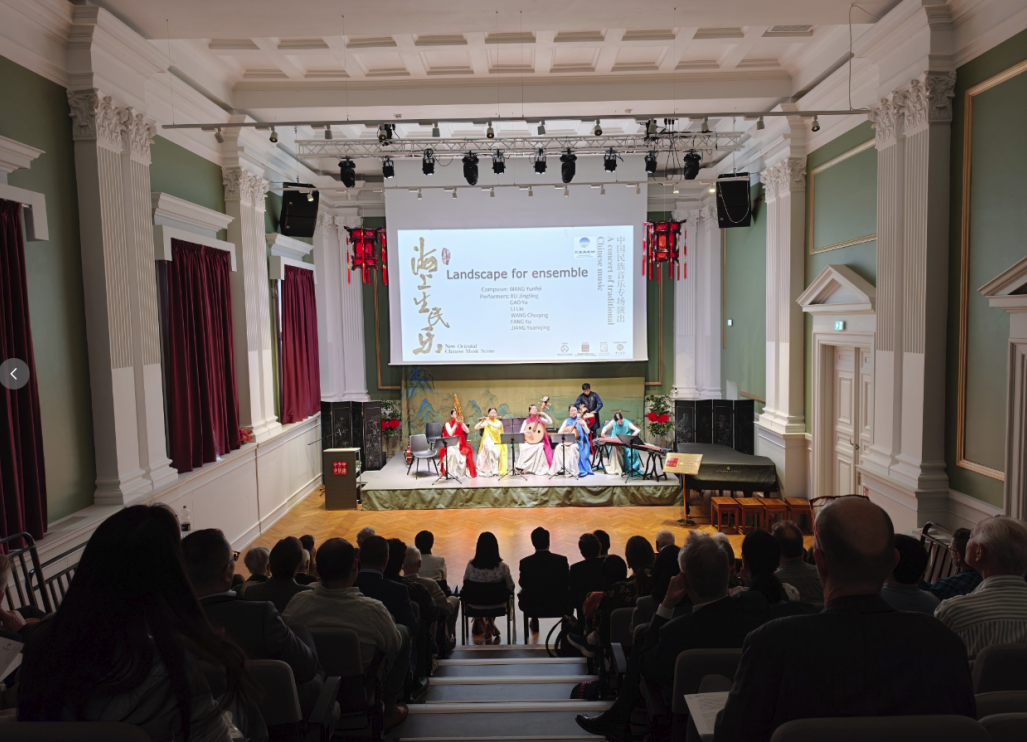
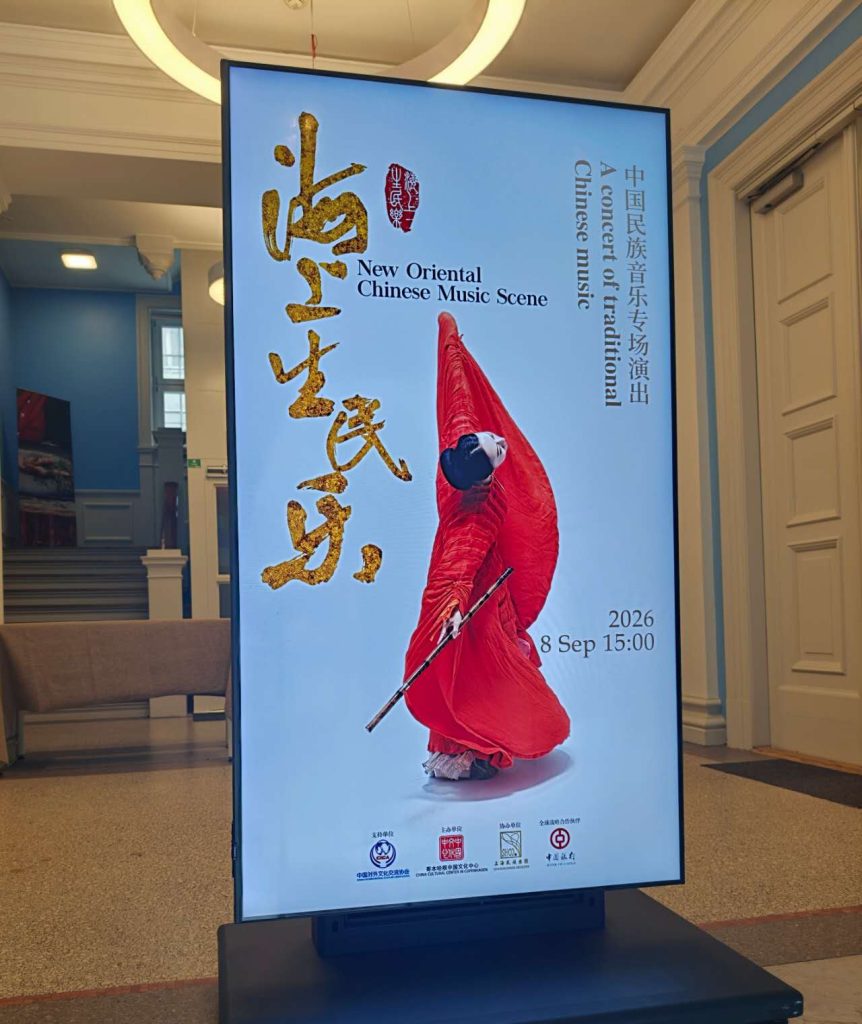
On September 8, the China Cultural Center in Copenhagen, with the support of the China International Culture Association, presented “New Oriental Chinese Music Scene – Chinese Traditional Music Concert” as part of its Mid-Autumn Festival celebrations.
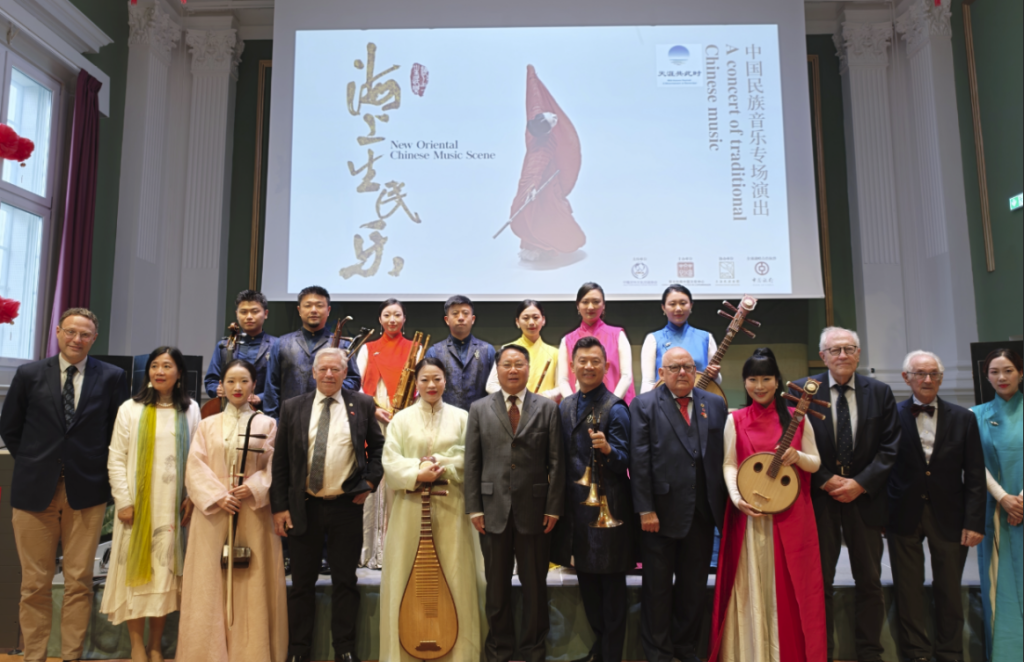
H.E. Wang Xuefeng, Ambassador of China to Denmark and his wife Tong Xin, former Danish Ambassador Leif Dunde, former Chairman of the OECD Education Committee and Denmark’s Representative to UNESCO Torben Kronbech Rasmussen, together with guests from Danish political, cultural, educational and media circles, gathered to enjoy the beauty of Chinese traditional music and celebrate the spirit of the Mid-Autumn Festival.
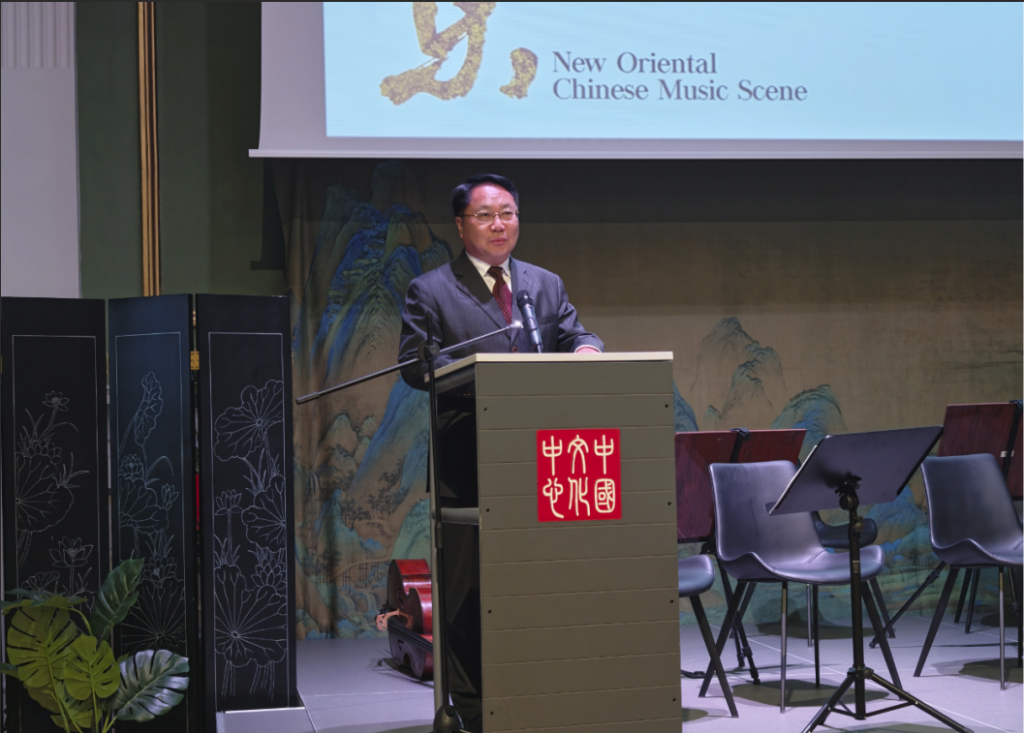
In his address, Ambassador Wang Xuefeng said that the Mid-Autumn Festival represents the Chinese people’s wishes for reunion, harmony and a better life. He expressed the hope that culture could serve as a bridge and music as a common language to promote mutual understanding and friendship between the people of China and Denmark.
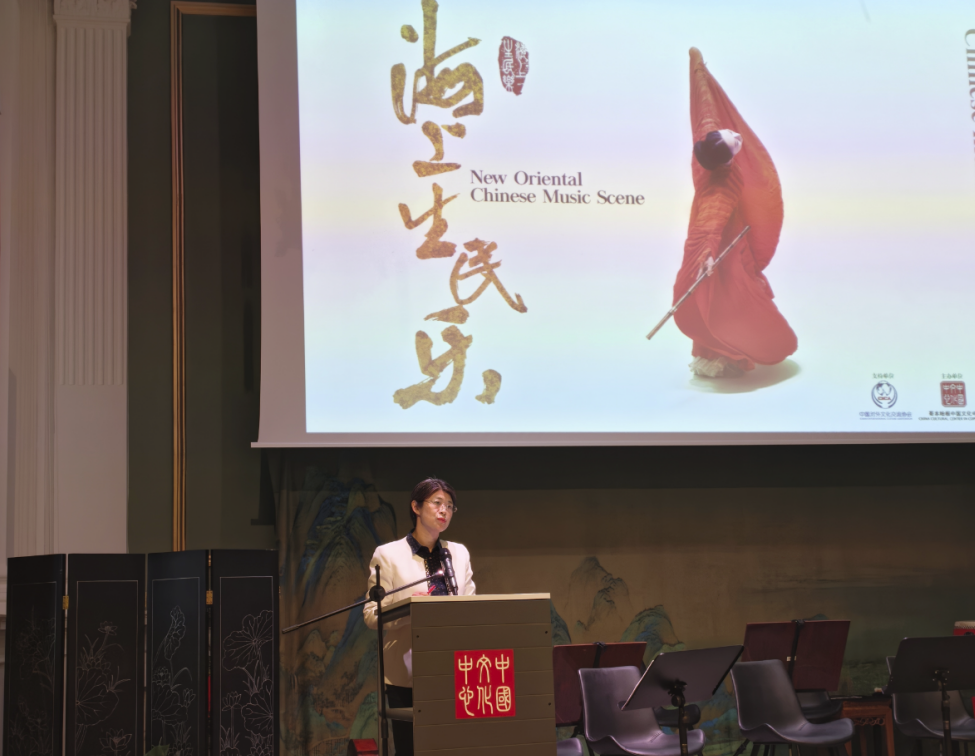
After the welcoming speech by Mu Xianghong, Director of China Cultural Center in Copenhagen, the concert was performed by the Shanghai Chinese Orchestra, one of China’s leading professional traditional music ensembles. Through a diverse programme, the musicians presented the richness and beauty of Chinese traditional music to Danish audiences.
The concert opened with a flute solo, followed by a pipa performance full of both delicacy and energy. Works such as The Spirit of Chinese Calligraphy and The Spirit of Langya brought to life the imagery of Chinese landscapes and traditional aesthetics. From Farewell My Concubine to Sword Dance, the programme moved between history, nature and human emotion, offering the audience a glimpse into the depth and diversity of Chinese culture.
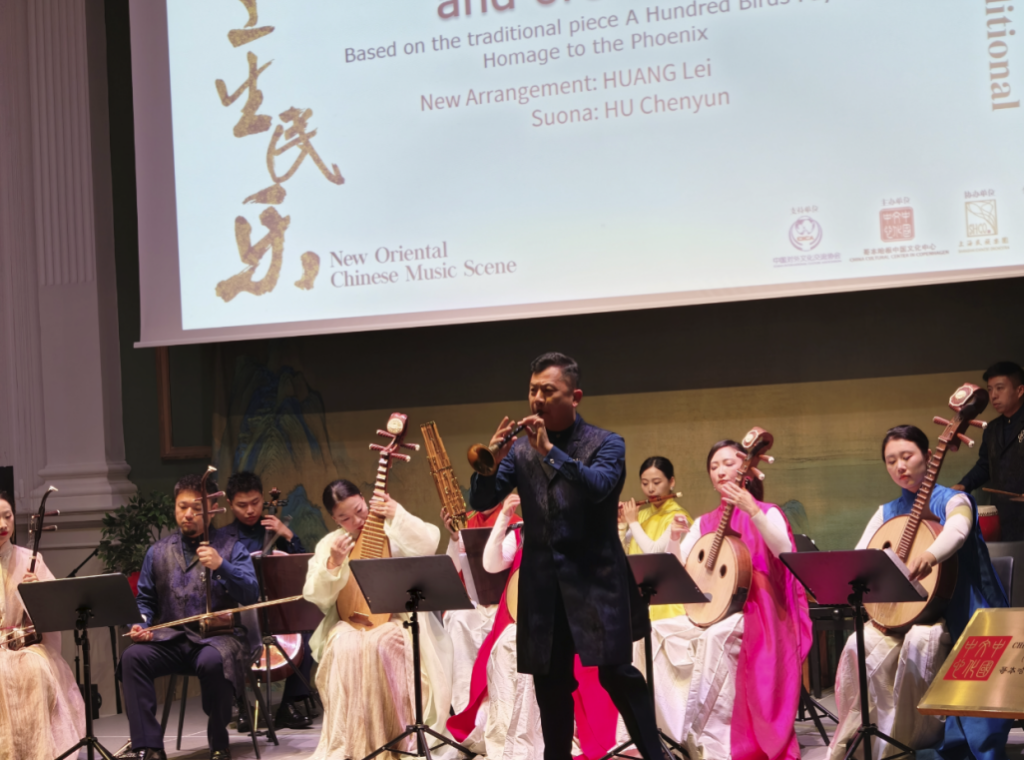
The programme also included a special performance of Rimsky-Korsakov’s Flight of the Bumblebee. Reinterpreted through Chinese traditional instruments, the familiar melody took on a distinctive eastern character, demonstrating how music can connect different cultural traditions.
As the concert came to an end, the audience’s enthusiasm continued. For the encore, the musicians performed the much-loved Danish song Pjerrot siger til månen (Pjerrot Says to the Moon). The familiar melody created an immediate connection with the Danish audience.
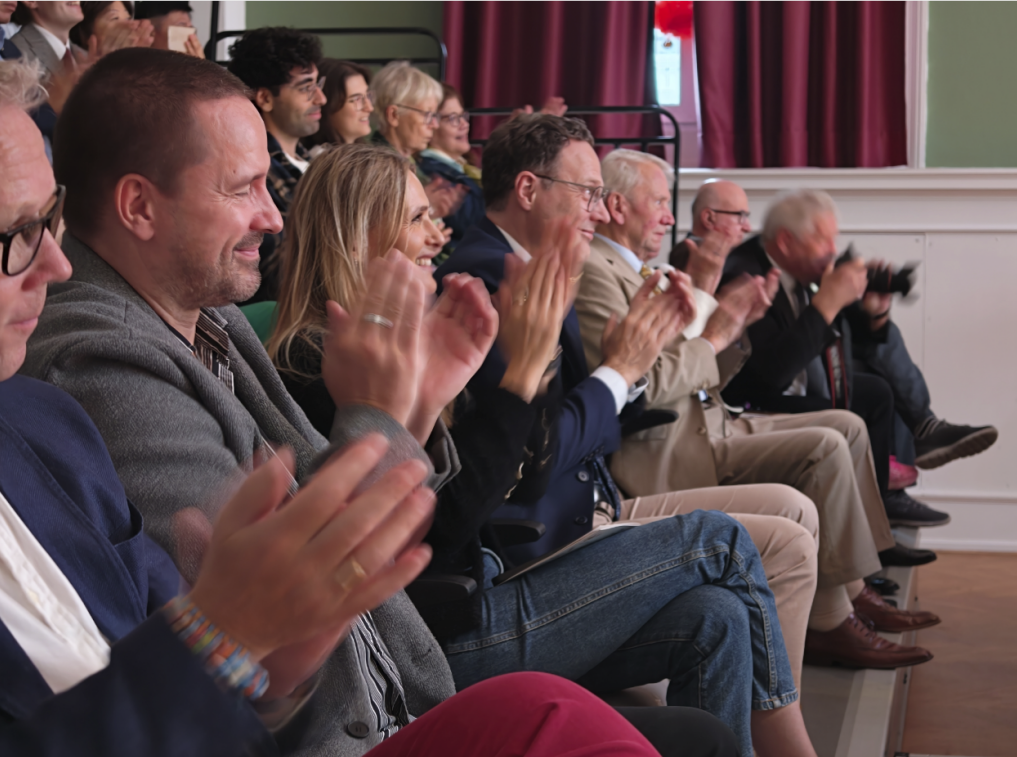
The moon, a core symbol of the Chinese Mid-Autumn Festival, became a shared image between the two cultures. Different traditions, yet similar emotions, came together through music.
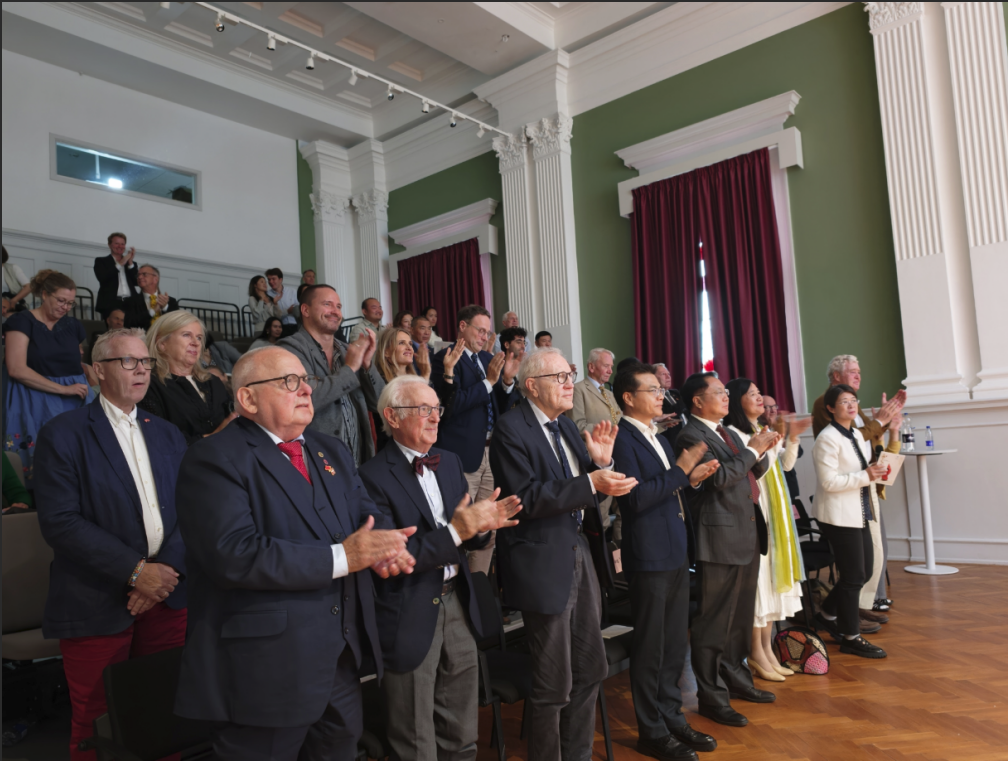
At the end of the performance, the audience rose to its feet for a third standing ovation. The prolonged applause was a heartfelt expression of appreciation for the musicians and a memorable moment of cultural exchange between China and Denmark.